How to Swim: A Beginner’s Guide to Essential Swimming Skills
Swimming is a useful life skill that can support physical activity, confidence, and enjoyment around water. However, learning to swim involves more than moving your arms and legs. Beginners need to understand water safety, breathing, body position, balance, and coordination before progressing to different swimming strokes.
If you are wondering how to swim, the best starting point is a supervised swimming program with a qualified instructor. Lessons can help you develop foundational skills at a pace suited to your comfort and ability. You do not need to master every movement at once.
This guide explains the main swimming skills beginners should learn, introduces common swimming strokes, and covers mistakes and safety precautions to understand before starting.
What Should Beginners Know Before Learning to Swim?
Before entering the water to practise, beginners should choose a suitable learning environment, understand their current abilities, and prepare basic swimming equipment. These simple decisions help make lessons more organized and appropriate for individual needs.
Choose a Supervised Swimming Environment
A swimming pool with qualified instruction and appropriate safety supervision is a suitable starting point for many beginners. Look for a facility with clear safety rules, trained staff, and a designated area for swimming lessons.
Avoid learning in rivers, lakes, canals, or the sea without appropriate training and supervision. Open water can involve currents, changing weather, limited visibility, and other hazards that are difficult for inexperienced swimmers to judge.
Understand Your Current Swimming Ability
Be honest about your experience. If you cannot swim independently, tell your instructor before the lesson begins. The instructor can then identify suitable starting skills and explain how the learning process will work.
Feeling nervous around water is also worth discussing. A good instructor can help you approach unfamiliar skills gradually rather than expecting you to perform movements before you feel ready.
Prepare Basic Swimming Equipment
A few basic items can make swimming lessons more comfortable:
- Suitable swimwear: Choose clothing designed for swimming that allows comfortable movement.
- Swimming goggles: These can help improve underwater visibility and reduce eye irritation from pool water.
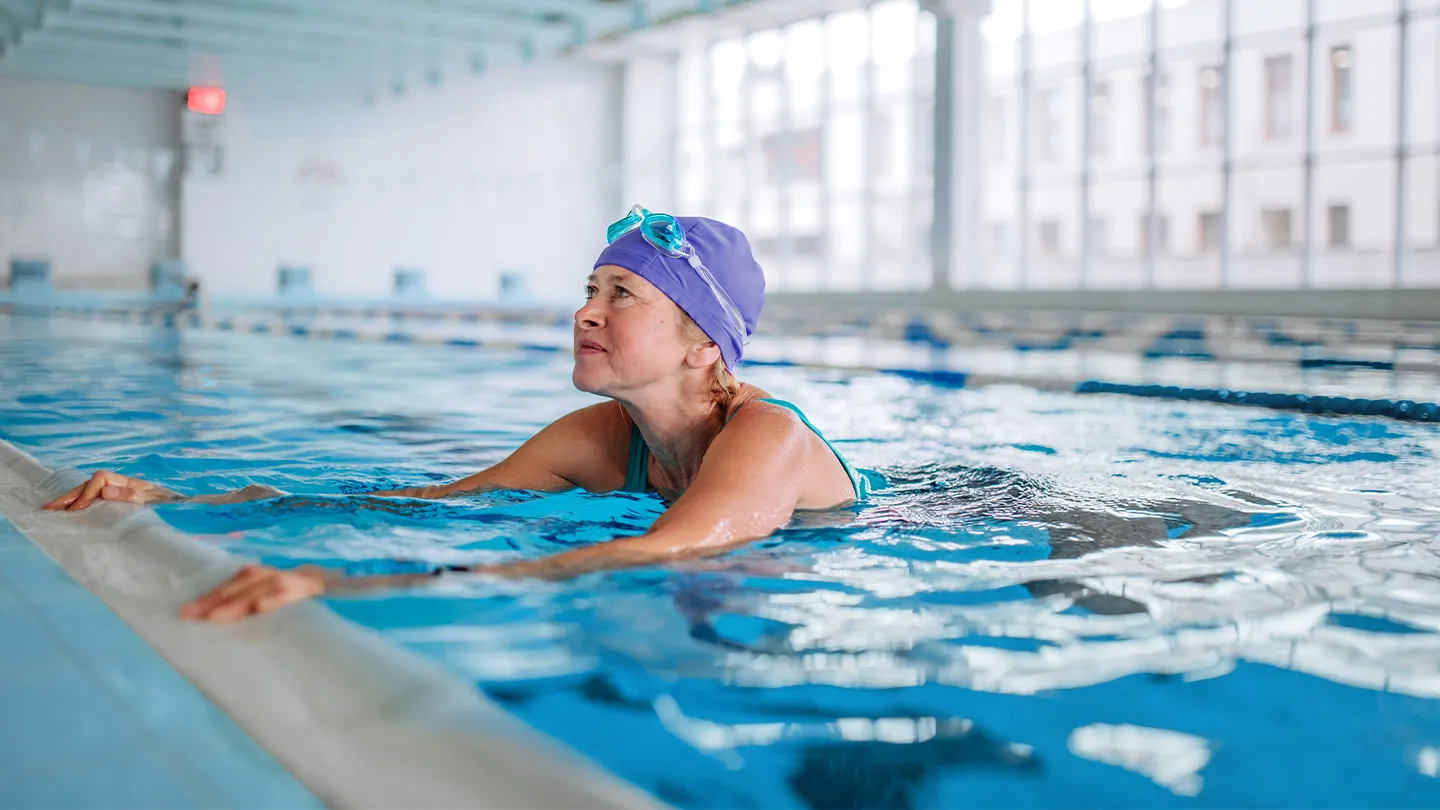
- Swimming cap: A cap may help keep hair away from the face and reduce drag.
- Instructor-approved training aids: Some lessons use flotation equipment to support specific learning activities.
Remember that flotation aids do not prove that someone can swim independently. Use them only as directed, and never treat them as a replacement for supervision.
How to Build Water Confidence and Learn Breathing
Water confidence and breathing control are important foundations for swimming. Beginners often focus on moving quickly, but learning to stay calm, understand instructions, and coordinate breathing can make later skills easier to develop.
Become Comfortable With the Learning Environment
Start by discussing your comfort level with your instructor. Lessons should be adapted to your ability, and you should never be pressured into entering water that feels unsafe or attempting a skill beyond your readiness.
Your instructor may introduce the pool environment, explain safe entry and exit procedures, and help you understand basic pool rules before moving to swimming activities.
Take your time.
There is no need to compare your progress with another learner. People can have different experiences, concerns, and learning needs.
Understand Breathing Techniques
Breathing while swimming requires coordination. Beginners may feel tempted to hold their breath, lift their head suddenly, or rush their movements when they become uncomfortable.
A qualified instructor can explain how breathing fits into the swimming stroke you are learning. Practice should take place in an appropriate supervised setting, with clear guidance and regular opportunities to rest.
According to the American Red Cross, structured swimming education includes skills intended to improve water competency and safety. Its swimming lessons provide information about learning opportunities for different age groups.
Do not practise prolonged breath-holding or underwater endurance challenges. These activities can be dangerous, including for people who are otherwise healthy.
What Basic Swimming Skills Should You Learn First?
Before learning full swimming strokes, beginners need to understand how body position, balance, leg movements, and arm coordination work together. These foundational skills are best introduced by an instructor who can observe your technique and provide appropriate support.
Body Position and Balance
Body position affects how comfortably and efficiently a person moves through water. Beginners may find that unfamiliar water movement makes balance feel different from standing or walking on land.
An instructor can explain how posture and relaxed, coordinated movement affect swimming. The goal is to understand how your body responds to water, rather than trying to force yourself into a position that feels uncomfortable.
Good balance takes practice.
Floating With Instructor Support
Floating is one of the foundational skills commonly introduced during beginner lessons. It helps learners understand buoyancy and how their bodies respond to water.
Some people find floating easier than others. Your comfort level, body composition, movement, and previous experience can affect how it feels.
Learn floating skills with qualified supervision and support appropriate to your ability. Never assume that being able to float briefly means you can swim safely or manage an emergency.
Kicking and Leg Coordination
Leg movements contribute to propulsion and balance in many swimming strokes. However, kicking too forcefully or moving without coordination can make swimming more tiring.
An instructor can demonstrate the appropriate leg movement for a particular stroke and help you identify common technique problems. Training aids may be used for specific exercises, but they should not replace direct supervision.
Arm Movements and Breathing Coordination
Swimming strokes use different arm patterns. Some involve alternating movements, while others use coordinated movements on both sides of the body.
Breathing must fit the stroke’s rhythm. This can take time to understand, especially when a learner is trying to coordinate several unfamiliar movements at once.
Here’s the thing: learning each skill separately before combining them can make the process easier to understand. Your instructor can decide when you are ready to bring those movements together.
How Do Basic Swimming Strokes Work?
Swimming strokes are different patterns of arm and leg movement used to travel through water. Beginners often encounter freestyle, backstroke, and breaststroke during lessons, although the most suitable starting point depends on individual ability and the instructor’s approach.
Freestyle or Front Crawl
Freestyle, commonly performed as the front crawl, uses alternating arm movements and a flutter kick. Swimmers coordinate their breathing with the stroke while maintaining a streamlined body position.
It is a common stroke in recreational and competitive swimming. However, combining arm movements, kicking, and breathing can be challenging for a new swimmer.
A qualified instructor can break the stroke into manageable components and help learners develop coordination progressively.
Backstroke
Backstroke is generally performed on the back, with alternating arm movements and a flutter kick. The swimmer’s face usually remains above the water, which can make the breathing pattern feel different from freestyle.
However, beginners still need to learn body position, direction, and awareness of nearby walls and other swimmers. Backstroke should be introduced in an appropriate supervised area, not attempted independently in deep water.
Breaststroke
Breaststroke uses a coordinated arm movement and a frog-like leg kick, followed by a glide. Its rhythm differs from freestyle and backstroke.
The timing of the arm movement, kick, and breathing can be difficult to coordinate at first. An instructor can explain each part and help learners develop the stroke safely.
Choosing a Suitable Starting Stroke
There is no single stroke that is easiest for every beginner. Some learners find one movement pattern more comfortable, while others need more time to develop balance, coordination, or confidence.
The right starting point depends on your ability and the teaching method used in your lessons. Rather than selecting a stroke based only on online advice, ask your instructor which foundational skills you should develop first.
Quick Comparison
| Option | Best for | Key benefit | Limitation |
| Freestyle | Learning a widely used swimming stroke | Useful for recreational and fitness swimming | Requires coordinated breathing |
| Backstroke | Learning a back-facing stroke pattern | Face generally stays above water | Requires awareness of pool surroundings |
| Breaststroke | Learning a distinct arm-and-leg rhythm | Clear movement sequence when mastered | Timing can be challenging |
| Swimming lessons | Developing practical swimming ability | Supervised instruction and feedback | Schedules and availability vary |
| Online tutorials | Understanding swimming concepts | Easy to review explanations | Cannot replace in-water supervision |
Swimming lessons vs. online tutorials: Lessons offer direct feedback and supervised practice, while tutorials help explain concepts. Online material cannot assess your swimming ability or supervise you in the water, so it should supplement rather than replace appropriate instruction.
What Swimming Mistakes Should Beginners Avoid?
Beginners often need time to coordinate several unfamiliar movements. Understanding common mistakes can help learners communicate with their instructors and focus on the skills they need to improve.
Rushing Before Learning the Fundamentals
Trying to learn a full stroke before understanding basic water safety, balance, and coordination can make the experience confusing.
Or maybe I should say it this way: progress should be based on demonstrated ability, not on how quickly someone reaches the next stage. Let your instructor guide the progression.
Using Tense or Uncoordinated Movements
Feeling nervous can cause beginners to tense their bodies or rush their movements. This may make it harder to understand the stroke and recognize when a break is needed.
Tell your instructor when an activity feels uncomfortable or confusing. They can adjust the lesson, explain the movement again, or return to a more familiar skill.
Attempting Skills Beyond Your Ability
Swimming independently in deep water, copying advanced movements without supervision, or treating a flotation aid as proof of swimming ability can create unnecessary risks.
Look — if you’re new to swimming, start with a qualified instructor and a supervised learning environment. Do not move to deeper water or more demanding activities simply because another learner appears ready.
Which Water Safety Rules Should Every Beginner Follow?
Water safety is part of learning to swim, not a separate subject to consider only after learning a stroke. Even people who have taken swimming lessons need to recognize hazards and follow appropriate safety precautions.
Follow Supervision and Lifeguard Guidance
Follow the facility’s rules and any instructions provided by lifeguards or swimming instructors. Beginners should learn in a designated area suitable for their abilities.
Children need close, attentive supervision around water. Adults who are learning should also avoid swimming alone, especially before they can demonstrate reliable swimming skills.
The CDC’s drowning-prevention guidance identifies swimming lessons and appropriate supervision as parts of a broader approach to reducing drowning risk. Lessons are valuable, but they do not eliminate the need for other precautions.
Understand Pool and Open-Water Risks
Pools and open water have different hazards. Pools may have depth changes, slippery surfaces, and nearby swimmers. Rivers, lakes, and coastal areas may involve currents, cold water, poor visibility, or sudden changes in conditions.
Beginners should not use online instructions as a reason to attempt open-water swimming independently. Follow local safety guidance, use designated swimming areas, and wear an appropriately fitted life jacket when required for boating or other water activities.
Recognize Fatigue and Ask for Help
Fatigue, discomfort, or confusion can affect a swimmer’s ability to respond safely. Stop the activity and tell the instructor or lifeguard if you feel unwell, overwhelmed, or unable to continue comfortably.
Never rely on another beginner to provide emergency supervision. Learn how to identify the facility’s safety procedures and how to get help when needed.
How Long Does Learning to Swim Take?
The time required to learn swimming varies from person to person. Previous experience, comfort in water, lesson frequency, instruction quality, and individual learning needs can all affect progress.
Factors That Affect Learning Progress
Some beginners are comfortable in water but need help coordinating their movements. Others may need more time to develop confidence and understand basic water-safety skills.
Progress also depends on what you mean by learning to swim. Understanding one stroke is different from demonstrating reliable swimming ability, recognizing hazards, and responding appropriately to changing conditions.
There is no universal timeline that guarantees competence.
Why Consistent Instruction Helps
Regular lessons give learners opportunities to revisit foundational skills and receive feedback. An instructor can identify difficulties that may be hard to notice when learning from written instructions alone.
Consistency does not mean pushing through fatigue or practising without supervision. Lessons should provide a suitable balance of learning, rest, feedback, and gradual progression.
Should Beginners Take Swimming Lessons?
Swimming lessons are a practical starting point for people who have little or no experience. Qualified instructors can adapt activities to different ages, abilities, and comfort levels while emphasizing water safety.
Benefits of Qualified Instruction
A structured program can help beginners understand swimming fundamentals in a logical order. Instructors can observe technique, correct misunderstandings, and help learners progress when they demonstrate the necessary skills.
Some learners prefer online videos because they can review explanations at their own pace. These resources can be useful for understanding terminology, but they cannot observe technique, provide physical supervision, or respond to an emergency in the water.
For most beginners, qualified instruction is a better foundation than trying to teach themselves entirely through videos.
Finding Beginner Lessons for Children and Adults
When choosing a swimming program, consider the instructor’s qualifications, class size, supervision arrangements, and experience teaching beginners. Ask whether the program accommodates people who feel nervous in water or need additional support.
Organizations such as the American Red Cross and the YMCA provide information about swimming education and water safety. Check the options available in your area before choosing a program.
The best program is one that matches the learner’s needs and gives appropriate attention to safety.
Frequently Asked Questions About Learning to Swim
1. How do you learn to swim as a beginner?
Start with a qualified instructor in a supervised swimming environment. Learn water safety, comfort, breathing, balance, and other foundational skills before progressing to coordinated movements and swimming strokes.
2. Can adults learn to swim if they have never learned before?
Yes. Adults can learn swimming skills through structured lessons suited to their experience and comfort level. A qualified instructor can help identify a suitable starting point and adjust the learning process as skills develop.
3. What is the first thing to learn when swimming?
Water safety and understanding your own ability should come first. Beginners can then work with an instructor on water confidence, breathing, balance, and other foundational skills before attempting full swimming strokes.
4. How do you breathe properly while swimming?
Breathing techniques vary by stroke. A qualified instructor can explain how to coordinate breathing with movement in a supervised setting. Avoid prolonged breath-holding or underwater endurance exercises, which can be dangerous.
5. Which swimming stroke is easiest for beginners?
There is no universally easiest stroke. The best starting point depends on a learner’s comfort, coordination, and abilities. An instructor can recommend an appropriate stroke after assessing foundational skills.
6. How long does it usually take to learn to swim?
Learning time varies with previous experience, confidence, lesson frequency, and individual needs. Rather than relying on a fixed number of lessons, focus on demonstrated skills and your instructor’s assessment of readiness.
7. Can you learn to swim without a swimming instructor?
Online resources can explain swimming concepts, but they cannot replace supervised, in-water instruction for beginners. A qualified instructor can observe technique, adapt activities, and help learners understand safety requirements.
8. What equipment do beginners need for swimming?
Beginners generally need suitable swimwear and may benefit from swimming goggles. A swimming cap or instructor-approved training aid can also be useful, depending on the lesson. Equipment does not replace supervision or swimming ability.
9. How often should beginners take swimming lessons?
The appropriate frequency depends on the learner’s schedule, needs, and the program available. Follow the instructor’s recommendations and allow time for rest and skill development rather than rushing through lessons.
10. What water safety rules should every beginner follow?
Learn in an appropriate supervised environment, follow lifeguard instructions, avoid swimming alone, recognize environmental hazards, and ask for help when needed. Remember that swimming lessons do not remove all drowning risks.
Final Thoughts on How to Swim
Learning swimming is a gradual process that begins with water safety, comfort, and foundational skills. Breathing, balance, floating, kicking, and coordinated movements all contribute to learning different strokes, but each learner progresses at a different pace.
If you want to understand how to swim, start by finding a qualified instructor and a supervised swimming program. Focus on developing reliable skills instead of rushing toward advanced techniques, and continue following water-safety guidance even as your confidence improves.
With appropriate instruction, patience, and consistent learning, beginners can work toward becoming more capable and confident swimmers.