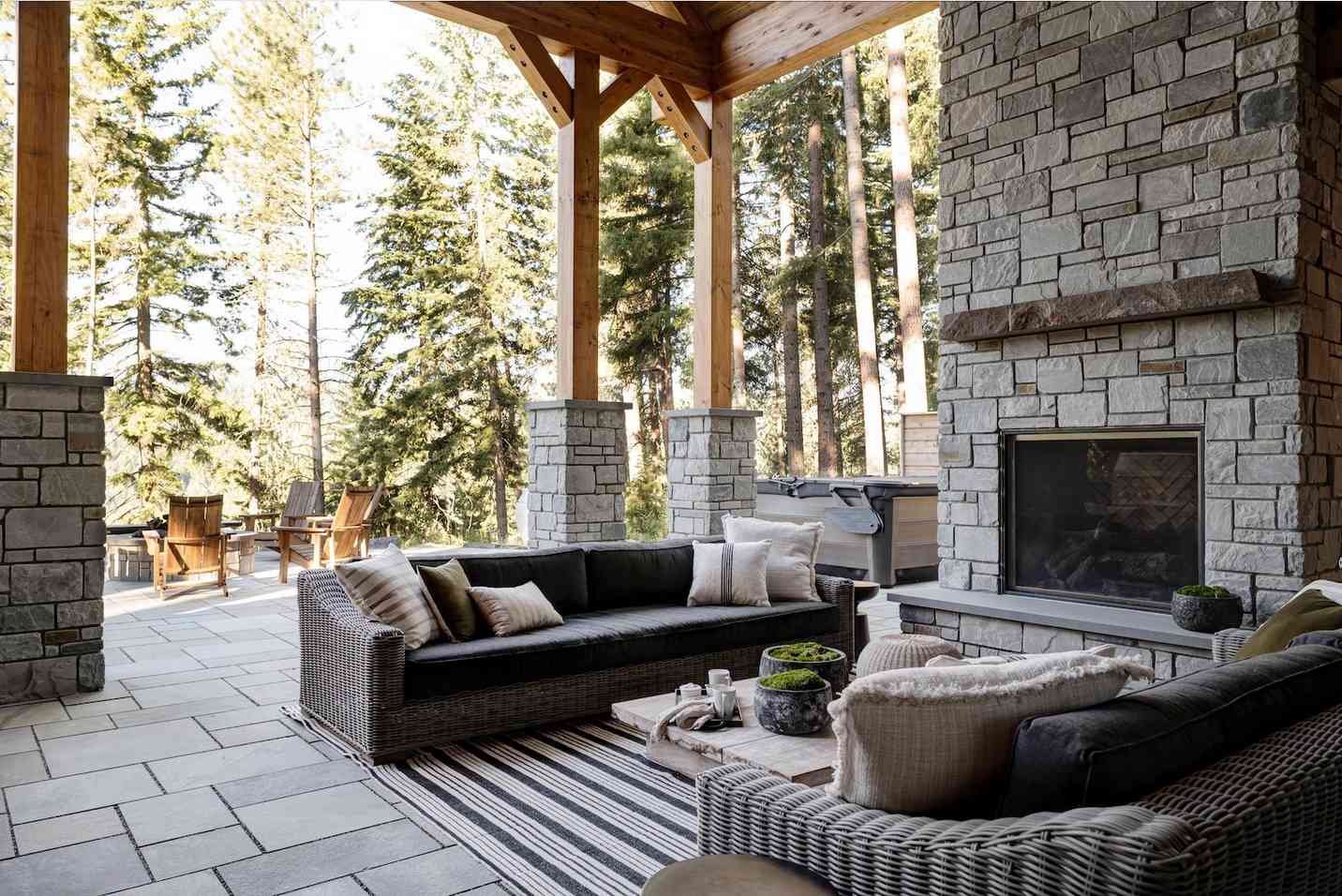
Outdoor Fireplace Ideas: 32 Warm & Cozy Designs
Outdoor fireplaces can do more than provide a place for a fire. They can define an outdoor room, anchor a seating arrangement, and give a patio the same sense of structure that a fireplace brings to an indoor living room.
Outdoor fireplace ideas range from traditional brick and natural stone structures to clean-lined concrete, stucco, and contemporary designs. The right choice depends on the architecture of your home, the size of your patio, how you plan to use the space, and the way you want people to gather around it.
According to the American Society of Landscape Architects, fire pits and fireplaces have repeatedly ranked among popular residential outdoor design elements in its landscape trends surveys.
Outdoor fireplace ideas are design concepts for incorporating a permanent or purpose-built fireplace into a patio, backyard, or outdoor living area. They can combine the fireplace with seating, landscaping, lighting, and other features to create a comfortable gathering space.
The 32 ideas below cover classic, modern, cozy, small-space, landscaped, and entertaining-focused designs.
Classic Outdoor Fireplace Ideas
1. Traditional Brick Fireplace
A traditional brick fireplace is a natural fit for Colonial, farmhouse, Craftsman, and other classic home styles. Warm red or brown brick gives the structure a familiar appearance while creating a strong architectural focal point.
Pair the fireplace with a simple hearth, comfortable lounge chairs, or a deep outdoor sectional. Wood-toned furniture and understated landscaping can make the area feel connected to the rest of the property.
2. Natural Stone Fireplace
Natural stone gives an outdoor fireplace a substantial, organic appearance. Irregular stone can create a rustic effect, while carefully stacked or cut stone works well in more refined landscapes.
This design suits yards with natural planting, stone pathways, or wooded surroundings. Add neutral cushions, timber accents, and a low coffee table to reinforce the relaxed character without making the space feel overly decorated.
3. Whitewashed Brick Fireplace
Whitewashed brick offers a softer alternative to traditional red brick. It can brighten a patio while retaining the texture and character of masonry.
This style works especially well with farmhouse, cottage, coastal, and transitional homes. Pair it with light-colored seating, natural wood, woven furniture, and simple greenery for a comfortable outdoor living room.
4. Fireplace With a Classic Mantel
A mantel can give an outdoor fireplace a more architectural appearance by visually framing the firebox. Depending on the overall design, it might be made from stone, brick, concrete, or another suitable material.
Keep the styling restrained. A mantel does not need to become an outdoor shelf packed with accessories. Its strongest role is often simply to provide proportion and a finished visual line.
5. Rustic Stone Hearth
A broad stone hearth can make a fireplace feel grounded and substantial. Rough textures and natural variations work particularly well in country-style or wooded backyards.
Surround the fireplace with deep chairs, benches, or a relaxed sectional. Timber details and informal planting can make the entire area feel like a natural extension of the landscape.
Modern Outdoor Fireplace Ideas
6. Sleek Concrete Fireplace
Concrete can create a clean, contemporary fireplace with strong geometric lines. Its neutral appearance also provides a useful backdrop for colorful cushions, greenery, or sculptural furniture.
A smooth concrete fireplace can work particularly well against a modern home with large windows and simple exterior materials. Keep the surrounding patio relatively uncluttered so the fireplace remains the visual anchor.
7. Minimalist Stucco Fireplace
Stucco creates a smooth surface that can blend easily with contemporary and Mediterranean-inspired homes. A simple rectangular structure can look polished without requiring elaborate decorative details.
Use restrained furniture and a limited material palette around it. The goal is to make the fireplace feel integrated with the architecture rather than like a separate object placed in the yard.
8. Black Contemporary Fireplace
A black fireplace creates immediate contrast, especially against pale concrete, light stone, or green landscaping. It can also give a large patio a more dramatic focal point.
Black does not have to mean severe. Add warm wood furniture, soft cushions, and subtle landscape lighting to balance the darker structure and create a more inviting evening setting.
9. Linear Outdoor Fireplace
A linear fireplace emphasizes width rather than height, creating a sleek contemporary feature. It can work particularly well along a lounge wall or within a carefully planned outdoor room.
The horizontal shape pairs naturally with low sofas and long benches. Keep nearby furniture visually simple so the proportions of the fireplace remain easy to appreciate.
10. Modern Fireplace With Built-In Seating
Combining a fireplace with built-in seating can make the entire structure feel intentional. A low masonry bench can extend from one or both sides of the fireplace, creating permanent places to sit.
Add removable outdoor cushions for comfort. This approach can also help define the boundary of an outdoor living room while reducing the amount of freestanding furniture needed.
Cozy Backyard Fireplace Ideas
11. Fireplace With a Comfortable Sectional
A sectional can turn a fireplace into the center of an outdoor living room. Rather than pointing every chair directly toward the fire, arrange the seating so people can see both the fireplace and each other.
This matters for entertaining. A beautiful fireplace loses some of its usefulness if everyone has to twist around to have a conversation.
12. Fireplace With a Circular Seating Area
A circular or curved seating arrangement creates an informal gathering space around the fireplace. It works particularly well when conversation is more important than creating a formal furniture arrangement.
Use several chairs, a curved sofa, or a combination of seating types. Leave practical walking routes around the group instead of filling every available section of patio.
13. Fireplace and Outdoor Rug
An outdoor rug can visually define the fireplace seating area, especially on a large patio where furniture might otherwise look scattered.
Choose a rug designed for outdoor conditions and large enough to connect the main seating pieces. Neutral patterns can complement a stone or brick fireplace without competing with its texture.
14. Fireplace With String Lights
String lights can soften a masonry fireplace and make the surrounding patio feel more intimate after sunset. They are particularly useful when the fireplace itself does not provide enough ambient illumination.
Combine them with low landscape lighting rather than relying on one light source. A layered approach can make seating, pathways, plants, and architectural details easier to see.
15. Fireplace With Built-In Bench Seating
A built-in bench is a practical option when you want permanent seating without filling the patio with furniture. It can run alongside the fireplace or form part of a larger seating wall.
Add weather-resistant cushions and a few movable chairs if you need additional flexibility. The result can feel structured while still accommodating different group sizes.
Small Outdoor Fireplace Ideas
Small patios need thoughtful proportions. A fireplace does not have to dominate the entire space to become a focal point.
Look — if you’re working with a small patio, here’s what actually works: think vertically, use corners intelligently, and let the surrounding furniture stay relatively compact.
16. Compact Patio Fireplace
A compact fireplace can provide the visual character of a larger installation without consuming as much patio area. Look for a design with appropriately scaled proportions rather than simply shrinking every component of a larger fireplace.
Place seating directly opposite or slightly angled toward the firebox. A small coffee table can complete the arrangement without overwhelming the available floor area.
17. Corner Fireplace
Corners are often underused in outdoor spaces. A fireplace placed there can turn an awkward section of patio into a useful focal point.
This arrangement leaves more central space available for seating or dining. It can be especially useful for narrow patios where a fireplace positioned in the middle would interrupt traffic flow.
18. Fireplace Against a Privacy Wall
A fireplace can become part of a privacy wall, creating a more enclosed outdoor room. The wall might incorporate masonry, suitable screening materials, or landscaping around the structure.
This approach can make a small patio feel more intentional. It also gives furniture a clear orientation instead of leaving the seating floating in an exposed area.
19. Small Fireplace With Vertical Design
A vertically oriented fireplace can add height without requiring a broad footprint. This can be useful when a patio has limited width but enough vertical visual space.
Use simple surrounding furniture so the tall structure remains balanced. Plants or narrow planters can help transition between the fireplace and the rest of the landscape.
20. Fireplace for a Small Covered Patio
A fireplace can make a compact covered patio feel like an outdoor room, but covered installations require particular attention to the fireplace system, ventilation, clearances, and surrounding structure.
Do not assume that a fireplace suitable for an open patio can automatically be installed beneath a roof. Manufacturer instructions and local requirements need to determine whether a specific design is appropriate.
Outdoor Fireplace Ideas With Landscaping
21. Fireplace Surrounded by Garden Beds
Planting beds can soften the hard lines of masonry and make the fireplace feel connected to the yard. Low plants around the perimeter can provide color without blocking views of the firebox.
Choose plants according to the local climate and the actual heat and clearance conditions around the fireplace. The planting should complement the structure rather than crowd it.
22. Fireplace With Potted Plants
Potted plants offer flexibility when permanent garden beds are not practical. Containers can introduce greenery, seasonal color, or architectural foliage around the seating area.
The biggest advantage is adjustability. You can move containers as the furniture arrangement changes, which makes this approach useful for renters or homeowners who want to experiment with different layouts.
23. Fireplace With Stone Landscaping
Repeating the fireplace’s stone material elsewhere can make the outdoor space feel cohesive. Stone paving, a pathway, retaining wall, or decorative border can echo the texture without making everything identical.
Here’s the thing: repetition is often more effective than matching. Similar materials in different locations can connect separate parts of a backyard without creating a one-material landscape.
24. Fireplace Framed by Trees
Trees can provide a natural frame around a fireplace and help it feel like part of the landscape. The effect can be particularly attractive in larger yards where the fireplace might otherwise appear isolated.
Be thoughtful about species, mature size, falling branches, and the fireplace’s required clearances. Landscaping around a heat-producing structure needs more planning than simply placing attractive plants nearby.
25. Fireplace With a Green Privacy Screen
A green privacy screen can make a fireplace area feel more secluded. Hedges, appropriately selected shrubs, or suitable climbing plants can help define the space without relying entirely on solid walls.
The screen should complement the fireplace rather than crowd it. Leave the required space around the fireplace and account for plant growth over time.
Entertaining-Friendly Outdoor Fireplace Ideas
Outdoor living areas often work best when the fireplace is planned alongside the activities that will happen there.
26. Fireplace Beside an Outdoor Kitchen
Positioning a fireplace near an outdoor kitchen can create a multifunctional entertaining area. Cooking, dining, lounging, and relaxing by the fire can happen within the same overall zone.
The key is separation. The fireplace should have its own appropriate space while the kitchen retains enough room for food preparation, storage, and movement.
27. Fireplace and Dining Area
A fireplace can sit near an outdoor dining table to add atmosphere during evening meals. The table does not necessarily need to face the fire directly.
Instead, arrange the dining and fireplace zones so they remain visually connected. This creates a more flexible backyard that works for both everyday meals and larger gatherings.
28. Fireplace With a Bar and Counter
A bar or counter can make a fireplace area particularly useful for casual entertaining. Guests can sit at the counter while others use the nearby lounge seating.
Keep circulation in mind. A beautiful counter is less useful if people have to walk through the main seating area every time they need a drink or serving item.
29. Fireplace With a Backyard Lounge
A dedicated lounge can make the fireplace the heart of an outdoor living area. Combine a sofa, lounge chairs, side tables, and a central coffee table around the fire.
Use weather-resistant upholstery and materials suitable for outdoor exposure. Soft textures can make the space feel comfortable without turning it into an indoor room.
30. Fireplace With a Covered Entertainment Area
A covered entertainment area can provide additional protection from sun and weather while creating a more defined outdoor room. A fireplace may serve as its visual anchor.
Covered installations deserve extra planning. The fireplace system, roof structure, ventilation, clearances, and manufacturer’s instructions all need to be considered before construction.
Unique Outdoor Fireplace Ideas
31. Fireplace With an Architectural Feature Wall
Instead of treating the fireplace as an isolated structure, incorporate it into a larger architectural wall. The wall might connect different areas of the patio or visually echo the home’s exterior.
This is a strong option for contemporary properties where clean geometry is part of the overall design. Lighting can emphasize the wall’s texture and shape after dark.
32. Fireplace as the Backyard Focal Point
For a larger property, the fireplace can become the organizing feature for the entire backyard. Seating, pathways, planting, lighting, and even an outdoor kitchen can be arranged around it.
Think about sightlines from inside the home as well. A fireplace that looks attractive through a living-room window can function as part of the home’s architecture even when nobody is sitting outside.
How to Make an Outdoor Fireplace Feel Warm and Cozy
A fireplace creates the focal point, but the surrounding details determine whether people actually want to spend time there.
Start with comfortable seating. Deep outdoor sofas, lounge chairs, benches, and sectionals should support conversation rather than simply face the flames.
Then layer the lighting. String lights, pathway lights, wall lighting, and subtle landscape fixtures can provide different levels of illumination without making the patio feel harsh.
Soft textiles also help. Outdoor cushions, throws designed for exterior use, and an appropriate rug can add visual warmth and make the space feel more finished.
Natural materials can reinforce the effect. Stone, brick, wood tones, woven furniture, and greenery tend to create a softer atmosphere than a patio dominated by hard surfaces alone.
Add a coffee table or side tables where people can place drinks and small items. A fireplace area becomes much more functional when guests do not have to balance everything on their laps.
Privacy matters too. Planting, screens, walls, or strategic furniture placement can make an open yard feel more intimate.
Seasonal accessories can provide the final layer, but restraint usually works better than clutter. The fireplace should remain the focal point.
What to Consider Before Adding an Outdoor Fireplace
An attractive design is only the starting point. Permanent fireplace construction involves practical issues that depend on the specific fireplace, fuel source, property, and location.
Measure the Available Space
Start with the entire outdoor area rather than measuring only the wall where the fireplace will go.
Consider:
- Fireplace footprint
- Seating area
- Walking routes
- Dining or kitchen zones
- Door and gate access
- Landscaping
- Storage
- Sightlines from the house
A fireplace that fits physically may still be a poor choice if it interrupts normal movement.
Think About Placement
Consider where the smoke, heat, views, and activity will interact with the property.
The fireplace should also be located according to its installation instructions. For example, a Heat & Glo outdoor fireplace installation manual emphasizes adequate clearances, service access, appropriate enclosure details, and protection from moisture.
Check Local Building and Fire Requirements
Rules can vary by jurisdiction and by fireplace type. Before construction, check the requirements that apply to your property.
Do not rely on a clearance number copied from a different fireplace model. The required distances can depend on the appliance, fuel type, surrounding materials, installation configuration, and applicable regulations.
Consider Ventilation and Chimney Requirements
A wood-burning masonry fireplace and a factory-built gas outdoor fireplace are not interchangeable systems.
Chimney and ventilation requirements depend on the design. Manufacturer documentation should be treated as a core part of the planning process rather than an optional reference.
Choose Appropriate Materials
Outdoor materials need to withstand weather as well as heat. Brick, natural stone, concrete, stucco, and other materials may all appear in outdoor fireplace designs, but the suitability of a specific product depends on its intended application and installation system.
Weather exposure also matters. Water can affect fireplace enclosures and surrounding construction, which is why installation documentation may specify drainage, flashing, slopes, and other details.
Plan Fire-Safe Clearances
Clearance is not just a visual consideration.
Keep furniture, decorative objects, plants, and other potentially combustible materials appropriately separated according to the fireplace’s instructions and local requirements. The National Fire Protection Association also provides outdoor-fire guidance emphasizing separation from combustible materials for certain outdoor flame devices.
Think About Weather Exposure
Rain, snow, humidity, wind, and freeze-thaw cycles can all affect an outdoor installation.
A covered patio may reduce some weather exposure, but it introduces other considerations involving ventilation and the surrounding structure. Never assume that a covered location automatically makes a fireplace installation suitable.
Consider the Fuel Source
Wood, natural gas, propane, and other systems have different planning requirements.
Fuel selection can affect storage, ventilation, connections, operation, maintenance, and the type of fireplace system you can use. A qualified professional can help determine what is appropriate for the property.
Use Professional Installation Where Appropriate
A permanent outdoor fireplace can involve masonry, structural work, gas connections, electrical components, ventilation, or other specialized construction.
Professional assistance is particularly valuable when the project involves permanent construction or questions about structural and fire-safety requirements.
To plan an outdoor fireplace area:
- Measure the available outdoor space.
- Choose a fireplace style that fits the home.
- Plan seating and circulation around it.
- Select suitable outdoor materials.
- Check local requirements and safety clearances.
- Confirm installation details with a qualified professional.
Outdoor Fireplace vs. Fire Pit: Which Fits Your Space?
Both options can create an inviting gathering place, but they produce different spatial experiences.
Outdoor fireplaces suit homeowners who want a defined architectural focal point, directional heat, and a structured outdoor room.
Fire pits work well for flexible seating and open gathering arrangements.
The key difference is the layout: fireplaces create a vertical focal point, while fire pits generally center activity around the flame.
| Feature | Outdoor Fireplace | Fire Pit |
| Visual impact | Strong architectural feature | More open and informal |
| Seating | Usually faces one direction | Can surround the fire |
| Space planning | Works well as an outdoor-room anchor | Works well for circular gatherings |
| Architecture | Integrates strongly with the home | Usually more landscape-focused |
| Best suited to | Defined lounge areas | Flexible social spaces |
Some homeowners prefer fire pits because they provide more flexible seating and a more open gathering arrangement. That’s a valid preference. An outdoor fireplace can make more sense when the goal is to create an architectural destination and a clearly defined outdoor room.
Frequently Asked Questions About Outdoor Fireplaces
What is the best material for an outdoor fireplace?
Common options include brick, natural stone, concrete, stucco, and purpose-designed fireplace materials. The right choice depends on the fireplace system, climate, architecture, desired appearance, and installation requirements.
How do I make my outdoor fireplace look cozy?
Start with comfortable seating, then add layered lighting, outdoor textiles, greenery, tables, and privacy elements. The furniture arrangement matters as much as the decorative details because it determines how people interact around the fireplace.
Can you put an outdoor fireplace on a small patio?
Yes, compact designs, corner fireplaces, and vertically oriented structures can work in smaller spaces. The design still needs to meet the fireplace’s installation requirements and leave appropriate room for seating, circulation, and safe operation.
What should I put around an outdoor fireplace?
Consider seating, a suitable table, outdoor lighting, landscaping, and privacy features. Keep potentially combustible furniture, plants, decorations, and other materials at the clearances specified for the fireplace.
Is an outdoor fireplace better than a fire pit?
Neither is universally better. A fireplace generally provides a stronger architectural focal point and directional fire experience, while a fire pit can offer more flexible seating around the flame.
Can an outdoor fireplace be used under a covered patio?
Some systems are designed for specific covered applications, while others are not. The fireplace’s installation instructions, ventilation, clearances, roof structure, and local requirements all need to be evaluated before installation.
How much space should be around an outdoor fireplace?
There is no single clearance that applies to every outdoor fireplace. Required distances depend on the specific appliance or construction, fuel source, surrounding materials, installation configuration, manufacturer instructions, and local requirements.
Do outdoor fireplaces need chimneys?
Some outdoor fireplaces require chimneys or other forms of venting, while certain factory-built systems have different ventilation configurations. The answer depends on the fireplace design and fuel source.
Final Thoughts
The best outdoor fireplace is not necessarily the biggest or most elaborate one. It is the design that fits the space, complements the home, supports the way people gather, and works with the surrounding landscape.
A traditional brick structure can suit a classic home, while concrete or stucco may complement contemporary architecture. Small patios can benefit from corner or vertical designs, and larger backyards can use a fireplace as the organizing feature for an entire outdoor living area.
The surrounding details matter just as much. Comfortable seating, layered lighting, appropriate landscaping, privacy, and useful tables can turn a fireplace from a standalone feature into a genuine gathering space.
Before moving from inspiration to construction, verify the requirements for the specific fireplace you are considering. Manufacturer instructions and local building and fire requirements should guide decisions about placement, ventilation, clearances, materials, and installation.
The goal is simple: create an outdoor space that looks inviting during the day and feels just as comfortable when the fire becomes the center of the evening.




One thought on “Outdoor Fireplace Ideas: 32 Warm & Cozy Designs”